
0W40 Engine Oil Complete Guide

The code “0W-40” tells us two important facts about the oil. First, the “0W” part shows that the oil stays thin enough when cold. That helps the engine start easily when temperature drops low.
Second, the “40” part reveals how thick the oil remains when the engine runs hot. That thickness helps keep a strong lubricating layer between moving metal parts. In short, 0W-40 oil works from freezing cold starts to hot engine conditions. That makes it a flexible choice for many climates.
Why Many Drivers Use 0W-40
0W-40 oil offers several clear benefits for many cars and driving styles.
First, it flows quickly at low temperatures, giving instant lubrication when you start your engine. This reduces wear from dry-metal contact at startup.

Second, at normal engine heat it stays thick enough to protect parts under load. That makes it good for heavy tasks, long drives, or fast city stop-go driving in short, high stress conditions.
Third, most 0W-40 oils use a full synthetic base. This helps resist breakdown at high heat, prevents sludge and deposit build-up, and extends oil life.
Because of these qualities, many drivers, especially those with turbo engines or older cars pick 0W-40 for all-season reliability.
Best Use Cases for This Oil
Here are situations where 0W-40 shines:
- Cold winter climates or cold-start heavy traffic: the oil flows fast and protects when engine parts are cold.
- High heat driving or hot summers: the hot-viscosity “40” keeps the oil from thinning too much under heat.
- Turbocharged, high-performance or high-load engines: strong oil film resists wear under stress.
- Cars are driven in mixed seasons: from cold winter to hot summer the oil handles wide temperature swings smoothly.
If your vehicle manual allows this viscosity grade, then 0W-40 gives a good “all-rounder” oil choice for many conditions.
Viscosity & Temperature Range Details
To help you see exactly how 0W-40 compares to lighter oils, here’s a table summarizing its key traits against temperature and use conditions:
| Parameter / Condition | 0W-40 Oil Behavior | What It Means For Engine |
| Cold-start / Low ambient temperature | Flows easily, low cold viscosity | Fast lubrication at startup, less wear |
| Engine at normal operating temp (~100 °C) | Maintains stable, thicker film (viscosity high) | Strong protection under load & heat |
| Wide ambient temperature range | Suitable from very cold to hot weather | Can use year-round in many climates |
| High-load or high-stress driving | Oil film resists thinning | Better wear protection under pressure & heat |
| Use in modern or turbo engines | Full synthetic base possible | Cleaner engine, better thermal stability |
| Long drive intervals / heavy duty use | Good oil life due to synthetic properties | Less frequent oil changes, stable protection |
This table shows why 0W-40 is valued for flexibility: it handles cold, heat, light and heavy use.
How 0W-40 Compares With Other Oils
Many mechanics and drivers compare 0W-40 against lighter oils like 0W-20 or oils with different cold-flow numbers (like 5W-40).
- Compared with thin oils (like 0W-20): 0W-40 offers stronger engine protection when hot or under load. But thinner oils may give slightly better fuel efficiency in light driving.
- Compared with oils labeled 5W-40: The cold flow of 0W-40 generally remains better (easier cold start), while hot-viscosity behavior stays similar. That makes 0W-40 often preferable for variable climates.
- Compared with standard mineral oils: 0W-40 synthetic oils resist breakdown, avoid sludge deposits, and deliver consistent protection.

So 0W-40 hits a middle ground: more protection than thin oils, better cold-start flow than oils with higher “W” number.
Who Should Use 0W-40 And Who Should Avoid It
Use 0W-40 if:
- Your climate varies widely between cold and hot seasons.
- You drive in heavy-load conditions (long highway drives, towing, city traffic).
- Your engine is older or uses turbocharging.
- The manufacturer’s manual approves a “40”-grade viscosity.
Avoid or think carefully about 0W-40 if:
- Your car maker recommends lighter oil (for example 0W-20 or 5W-30) for fuel efficiency or design reasons.
- You drive mostly light, short trips in moderate climate lighter oil may give slightly better economy.
Always check the engine manual first. The oil grade matters most.
How to Maintain Engine Oil (Change & Monitoring)
Even the best oil needs proper care. When using 0W-40, follow these simple steps to keep engine healthy:
- Change oil according to the vehicle manufacturer’s recommended interval: often every 8,000–15,000 km for full synthetic, but check manual.
- After adding oil, run the engine and inspect for leaks to ensure seals and gaskets remain tight.
- Using the correct oil amount overfills or underfills hurts engine lubrication.
- Keep filters clean and replace them with every oil change for best performance.
If you follow basic care, 0W-40 will protect your engine well under many conditions.
Common Myths and Misbeliefs
Some people believe thick oils cause poor fuel economy. That can be true if oil is too thick for the engine tolerances. But modern synthetic 0W-40 balances flow and protection so the difference is small if the engine allows it.
Others worry that 0W-40 might be “too heavy” for summer or hot climates. In fact, its “40” rating maintains stable viscosity at high temp, so oil film stays strong and protects the engine.

Finally, some think diesel-engine oil rules differ. While certain diesel engines need special additives, many 0W-40 oils meet standards for petrol and some diesel engines but always verify oil approvals before use.
Key Tips Before Choosing 0W-40
- Check the owner manual for approved viscosity and specs. Never guess.
- Choose full synthetic 0W-40 for best performance under stress or wide-climate conditions.
- Use brand or oil with proper certifications (API, ACEA or manufacturer-specific).
- Change oil and filter at recommended intervals.
- Watch engine behavior after oil change, listen for unusual noises, check temperature, check for oil consumption.
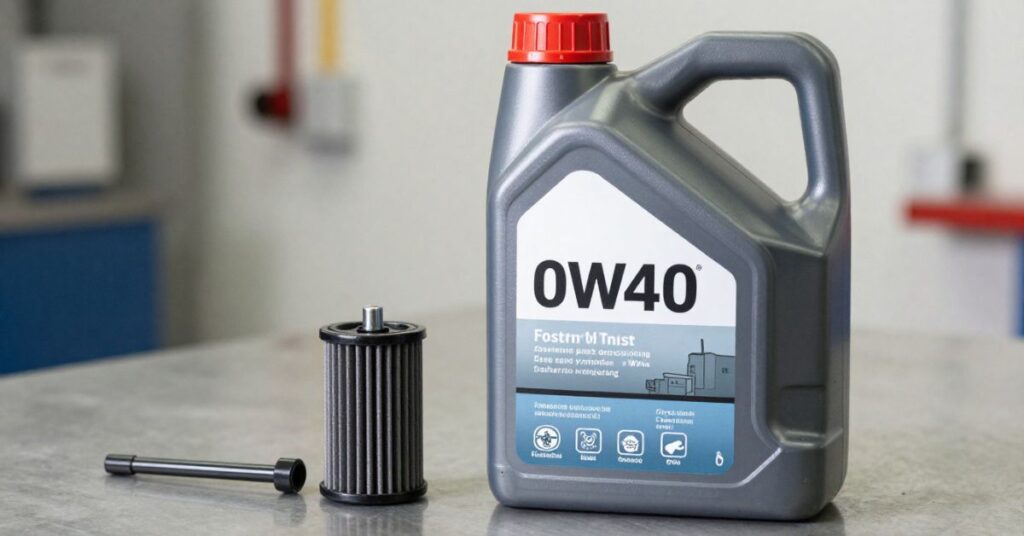
If you follow these steps, 0W-40 oil will serve as a reliable, flexible lubricant for most driving needs.
Conclusion
0W‑40 engine oil offers an excellent balance of cold-start flow and high-heat protection, making it a versatile choice for a wide range of engines. Its full synthetic composition ensures durability, cleanliness, and strong wear resistance under stress. While it works best when approved by your vehicle manufacturer, 0W‑40 can handle everything from cold winter mornings to hot summer drives. Following proper oil change intervals and monitoring your engine will maximize its benefits. For drivers seeking reliable, all-season lubrication with minimal compromise, 0W‑40 is a smart choice.
FAQs
1. Can I use 0W‑40 in any car?
Only if the manufacturer approves its viscosity and specifications.
2. How often should I change 0W‑40 oil?
Every 8,000–15,000 km or as per your vehicle manual.
3. Is 0W‑40 good for cold climates?
Yes, it flows easily at very low temperatures.
4. Will 0W‑40 reduce fuel efficiency?
Impact is minimal; protection outweighs slight difference.
5. Can 0W‑40 be used in diesel engines?
Yes, if it meets diesel engine specifications and approvals.

Esha Ashfaq is an SEO expert and content writer. She writes clear, SEO-friendly content that boosts traffic and rankings.